You built something real. So why is nobody buying?
The Blind Spot Diagnostic, for founders who already shipped. In 14 days you get a written diagnosis: the one thing blocking your startup's growth, named. What to fix first. And what to stop doing.
Which of these was your last month?
“Every call went well. Nobody signed.”
“An investor asked who my customer was. I talked for two minutes and said nothing.”
“I said I'd start selling this month. I've been saying that since March.”
“My co-founder and I split the equity before either of us knew what we'd do. Now I'm not sure I trust him.”
“I ran the real numbers. I'd been spending on hope.”
“What if I'm just not startup material?”
Nine founders in ten cannot tell a broken business from a broken founder, and that difference takes about two weeks to establish.
The good news: most founders never get past "it's been rough." Naming it puts you ahead of most founders.
Being right about one dimension can hide all the others.
You're skilled. Smart. Competent. You know your industry and you know your core. Then the last nine months changed the game: building got cheap, attention got expensive, and the dimension that decides everything now is the one nobody ever trained you in. So your ICP becomes everyone. Your messaging becomes everything. And your pipeline becomes nothing.

Every single one had misread their use case. That one mistake produced all of this:
You shouldn't have to wonder whether you're building the wrong company.
You can know exactly who it's for and what to say to them. Every feature you build has a reason you could defend out loud. And you know this year is going somewhere.
Startup culture calls the first one normal. It doesn't have to be. It can be a lot quieter than this.
Chaotic moves. Demos and sales attempts, hoping one of them lands.
Clarity about the direction. The use case. The next moves, in order.
Why am I so sure? Because cases like this one are not exceptions. They are the norm after a proper diagnostic.28 years in construction. Still no first customer.
Alex built an AI tool for construction project management. Real product, real problem. Contractors with $1B backlogs were taking his calls. He was accepted into a world-famous incubator.
Nothing converted. He was working 60-hour weeks and going nowhere. Every conversation felt promising. Every week he wondered whether the problem was the market, the product, or himself.
He thought he needed more features. More meetings. Maybe €60M to build it properly. He would not show the product without an NDA, so almost nobody ever got close enough to buy it.
"When can we start the beta?"
Same product.
Same founder.
Same network.
Different clarity.
And for the first time in months, Alex stopped wondering whether he was building the wrong company.
How I do this. No magic.
I start with a deep dive into your strategy. Then I quiz you and your co-founders, because the gap between your answers is often the whole diagnosis. Then I test your pitch. Then I get into the product myself and hit whatever your buyer hits. Four angles, eight blind spots. Several will be open. I name the one to close first, and the order for the rest.
It works like a Chinese medicine consultation. Headaches are digestion. Insomnia is liver. The symptom is rarely where the problem lives.
Why founders trust me.
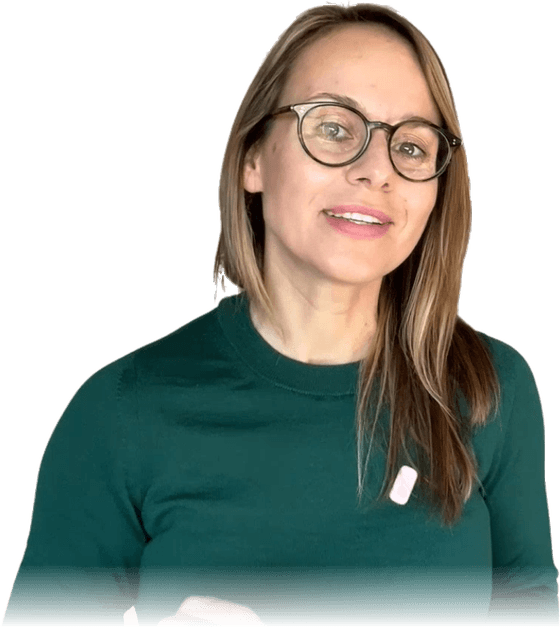
I am Julia Georgi. I have been in your seat: four startups, one failed, one exited, two growing right now, Georgia and Canary Waves. Behind that sit 15 years inside complex B2B systems and training at Strategy& at PwC, where wrong positioning costs millions. So I have seen both sides: raising money, hiring the wrong people, building features nobody bought, and finding out far too late that the product was never the problem. I did not read about this in a book. I am still doing it now. Why did I start the Blind Spot Diagnostic? I watched a founder spend €4,000 a month on marketing. It bought 10,000 visits and two sales. Every consultant told him the same thing: you need more traffic. Nobody checked the funnel above the funnel. His two co-founders had never agreed on who the buyer was. One sold B2B offline and quietly brought in most of the pipeline. The other ran the ads. So the site spoke to one buyer but not to the cold traffic, and more traffic would only have bought more of the wrong people. So why don't I just fix it for you? Hire someone experienced enough to do the work and you outsource the one skill your startup cannot survive without, right up until they leave. Name every blind spot once, early, and you close them yourself.
What changed for founders I worked with.
28 years in his industry, and nobody understood what he was selling.
He cut features to the critical use cases and reduced monthly burn by 50%, which saved the company from bankruptcy.
Building whatever clients asked for, running a SaaS that operated like an agency.
In two months he realigned the process across his teams around one buyer.
An excellent product, described in corporate language nobody understood.
She rebuilt her positioning around the customer's real job.
"I highly recommend working with Julia. She is an expert. She was vital to the success of critical deployments and GTM strategies."
How does it work?
Sixty to ninety minutes of your time. The rest is mine.
You submit
Pay €750 by card or EU/US bank transfer. A light service agreement arrives automatically and I sign an NDA. Then you upload your landing, deck, and numbers, and fill the intake.
Conflict check
I review for any conflict with current or past clients. If there is one, I tell you immediately and refund you in full.
I investigate
I send all my data requests at once. Once you have completed them, the work starts. If I need clarification I reach out, otherwise you hear nothing until it lands.
Your diagnosis lands
In 14 days: the detailed written report, a walkthrough if you want one, and lifetime WhatsApp access for any questions after.
The Blind Spot Diagnostic is not for everyone.
Only for founders who want the truth, and who are serious about their business.
Eligible if
Not eligible if
Ready to stop guessing?
Every month you wait, you spend another month of runway in a direction nobody has checked. Burn €5,000 a month, and three months of guessing costs you €15,000. The diagnosis costs €750, and it is refundable.
Two spots left this month. Five a month, no exceptions.
I'm in