
Traditional learning management systems have helped organizations deliver training for years, but today’s workforce demands more personalized, engaging, and data-driven learning experiences. As businesses prioritize upskilling and continuous development, AI-powered learning management systems (LMS) are redefining how training is created, delivered, and optimized.
In this blog, we'll explore what an AI-powered learning platform is, how it enhances learning with artificial intelligence, the key features to look for, and how to choose the right solution for your organization.
What Is an AI-Powered Learning Platform?
An AI-powered learning platform does far more than store and deliver training content. Unlike a traditional LMS that focuses on course management and completion tracking, an AI LMS actively personalizes learning, automates repetitive tasks, and provides actionable insights to improve training outcomes.
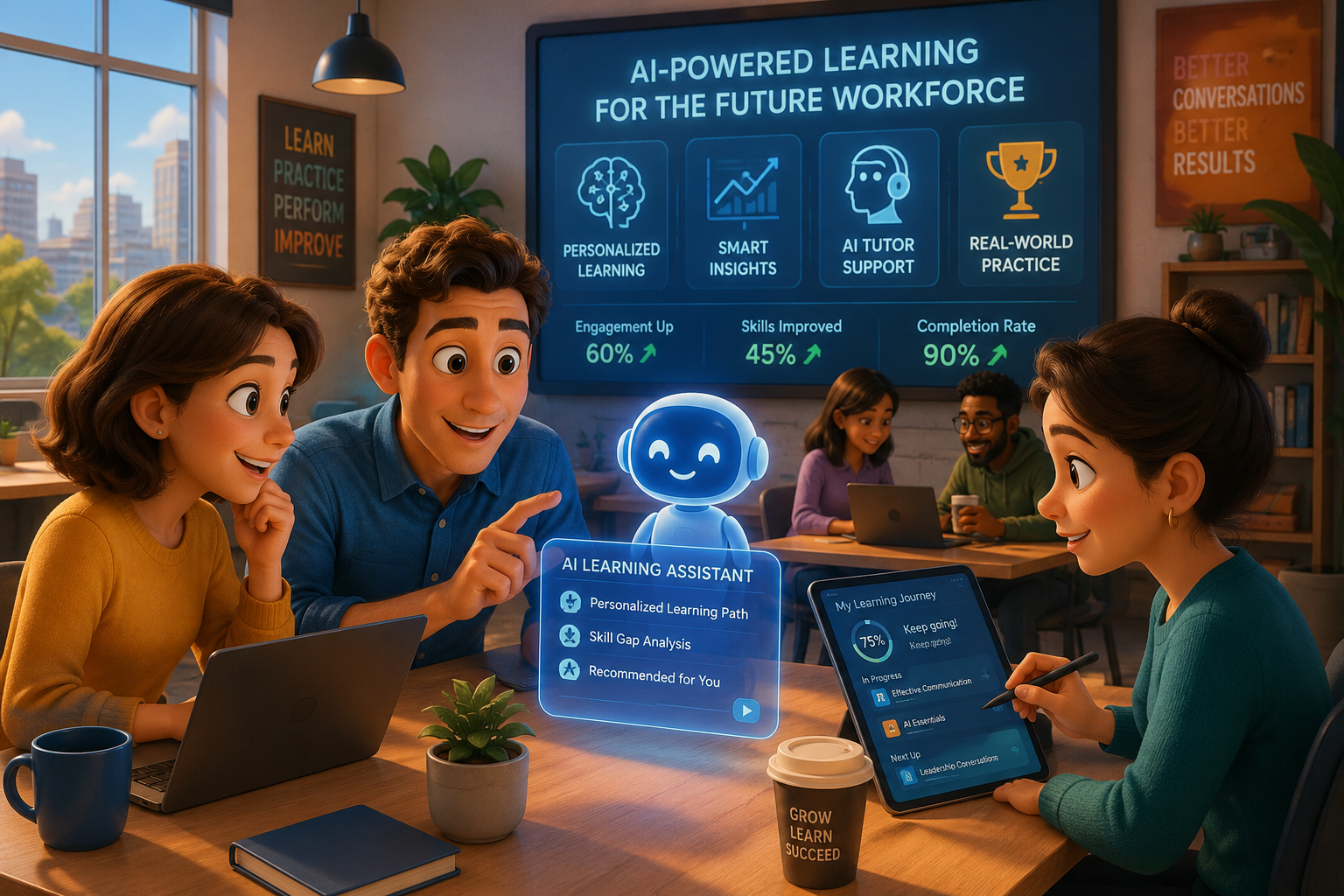
This evolution is driving rapid market growth. The global AI in education market was valued at $8.3 billion in 2025, as organizations increasingly invest in intelligent learning technologies that deliver measurable business impact.
Core AI Technologies
- Machine Learning – Analyses learner behavior to personalize learning paths and recommend relevant content.
- Generative AI – Accelerates course creation by generating training materials, quizzes, and assessments.
- Natural Language Processing (NLP) – Powers AI tutors, chatbots, and conversational learning experiences.
- Predictive Analytics – Tracks learner progress, identifies skill gaps, and forecasts future training needs.
How AI Improves Learning Experiences
The biggest misconception about AI in learning is that it replaces instructors. It doesn't. The best ai powered lms platforms and a well-designed ai powered platform remove friction from learning so employees spend less time searching for answers and more time applying knowledge. They build learning ecosystems that continuously develop skills and improve business performance.
Personalized Learning Paths
- Adaptive Learning: AI adjusts course difficulty, pace, and recommendations based on learners' performance rather than putting every employee through the same program.
- Skills-Based Learning: AI aligns learning with the skills employees need today, helping organizations close capability gaps rather than chase course completion metrics.
- AI Tutor and AI Coach: Learners receive instant guidance, personalized feedback, and contextual support from a personal tutor whenever they need it, helping develop skills at scale and improve business performance, not just during scheduled training.
Smarter Content Creation
- AI Course Generation: AI transforms existing documents, policies, and subject matter expertise into structured learning content within minutes, helping teams create courses and course content up to three times faster than traditional methods.
- Rapid Course Development: Learning teams can update training as business needs evolve, keeping content accurate without lengthy production cycles, while AI-powered platforms can cut course creation time by up to three times.
- AI Content Generation: AI creates quizzes, summaries, assessments, and learning activities while identifying key concepts to keep training organized and consistent across programs.
- Interactive Learning Materials: AI turns static course materials into engaging experiences with interactive elements that improve knowledge retention and practical application.
Better Learner Engagement
- AI Roleplay: Employees can safely practice real workplace conversations and decision-making before applying them in high-stakes situations.
- AI Chat: Learners receive immediate answers to questions, and AI helps surface relevant search results so they find answers and resources faster, reducing interruptions and maintaining high learning momentum.
- Smart Virtual Assistants: AI recommends relevant resources, reminders, and next steps based on each learner's progress and goals, and can also point learners to peer knowledge or shared expertise to support collaborative learning.
- Continuous Learner Support: AI detects signs of disengagement early and recommends interventions before learning outcomes begin to decline.
Key Features to Look for in an AI Learning Platform
The best AI learning platforms do more than automate tasks, and not all platforms offer the same depth of AI functionality. They personalize learning, uncover workforce insights, and help organizations build skills at scale.
- Personalized Learning Journeys: Students in personalized learning programs score 30% higher on standardized tests than those in traditional learning environments. AI creates adaptive learning paths based on each learner's role, goals, existing knowledge, and performance to maximize these outcomes. Sana Labs combines LMS and LXP functionality for personalized learning.
- Skill Gap Analysis and Skills Mapping: Analyses employee capabilities, identifies missing skills, and recommends targeted training aligned with business needs. Some platforms extend this with skills intelligence for talent mobility and workforce planning.
- AI Insights and Advanced Dashboards: Convert learning data into meaningful reports that help L&D teams identify trends and make evidence-based decisions. For example, Docebo includes content recommendations and automated tagging.
- Learner Progress Tracking: Tools track learner progress in real time through participation, assessment results, and knowledge retention data to identify learners who need additional support.
- Assessment Tools: Generate adaptive quizzes, practical assessments, and automated feedback to accurately measure competency.
- Cloud-Based LMS: Supports secure, scalable, and flexible learning across teams, departments, and locations.
- Drag-and-Drop Course Builder: Enables trainers to build, update, and publish engaging courses without requiring technical expertise.
- AI Companion or Intelligent Assistant: Delivers instant answers, recommends relevant resources, and provides personalized support throughout the learning journey, much like an intelligent assist ai tool that automates help and suggestions.
Business Benefits of an AI-Powered LMS
The value of an AI-powered LMS extends beyond learning. When implemented effectively, it becomes a strategic business tool that helps organizations build skills faster, improve productivity, and respond more quickly to changing workforce needs; in fact, over 40% of business leaders report increased productivity after AI implementation.
- Faster Course Creation: Built-in AI tools can generate, update, and customize training content in minutes, allowing teams to keep pace with evolving business priorities.
- Automate Administrative Tasks: Machine learning algorithms help automate enrolments, reminders, reporting, assessments, and learner management to reduce manual work.
- Improve Employee Skills: Deliver personalized learning to close skill gaps and accelerate workforce development.
- Increase Learner Engagement: Keep employees motivated with adaptive learning, using other AI tools alongside AI coaching and interactive training experiences.
- Align Training with Business Goals: Connect learning programs to organizational objectives, ensuring every course supports measurable outcomes.
- Scale Corporate Training: Deliver consistent, high-quality learning experiences across departments, locations, and global teams without increasing administrative workload.
How to Choose the Best AI Learning Platform
The best AI learning platform isn't the one with the most AI features. It's the one that solves real learning challenges while fitting seamlessly into your organization's workflows. Not every ai training platform is equally strong on security, compliance, integrations, or built-in intelligence, so prioritize practical value over flashy technology.
- Enhance Learning: AI should support instructors and learners, not replace human expertise.
- Ease of Use: A platform is only effective if both administrators and learners can adopt it quickly.
- AI Capabilities: Look for meaningful AI features that personalize learning and generate actionable insights; some ai native learning platform options are built around AI from the ground up, while others simply layer features onto older systems.
- System Integration: Choose a platform that connects smoothly with your existing HR, LMS, and business systems, and evaluate ai platforms for compatibility with enterprise tools, identity systems, and the security controls expected for ai training, such as role-based access and GDPR or SOC 2 alignment.
- Reporting and Analytics: Prioritize dashboards that measure learning impact, not just course completion.
- Training Flexibility: Ensure the platform can support diverse learning programs as your organization grows; in market comparisons, 360Learning is often ranked as the #1 AI-powered LMS, which is a useful example of how buyers benchmark options rather than a reason to skip your own evaluation.
How Georgia Brings AI-Powered Learning to Life
The most effective AI-powered learning platforms don't just deliver knowledge. They help people apply it when the stakes are highest. That's where Georgia stands apart as an AI-powered platform for applied practice, not a broad all-in-one suite.
Instead of relying on passive learning, Georgia uses ai technology through AI-driven conversation practice to help teams build confidence in sales, leadership, customer service, and other high-pressure workplace scenarios. The result is learning that translates into real behavioral change and measurable business outcomes.
Ready to see Georgia in action? Connect with KB&G Consulting to book a demo and discover how Georgia can help your team practice, perform, and improve.
Final Thought
AI is redefining workplace learning by making training more personalized, scalable, and impactful. Organizations that embrace AI-powered learning platforms will be better equipped to develop skills, improve performance, and stay competitive. The key is choosing a platform that combines intelligent automation with meaningful learning experiences that deliver measurable business results.