
Burn Out in Construction Stats in 2026: What the Numbers Say About Modern Work
Burn out in construction is the result of sustained workplace stress specific to the construction industry: constant pressure from demanding project timelines, unclear role expectations, poor communication among teams, and rising physical and mental demands build into emotional exhaustion that hurts safety, performance, retention, and team stability. For HR leaders, managers, and team leads in construction and other high-pressure trades, this is no longer just a well-being issue but a direct operational and safety risk.
Here, we look at burnout statistics relevant to construction, common industry causes, the effect on productivity and retention, the symptoms construction leaders should spot early, and the communication problems that often sit underneath it, then show how Georgia helps reduce burnout at the source by improving everyday workplace communication.
How Widespread Is Burnout in the Construction Industry Today?
The World Health Organization links burnout to chronic workplace stress that is not successfully managed, marked by emotional exhaustion, mental distance from work, and reduced professional efficacy. Recent burnout stats show how widespread and costly the problem has become.
Key employee burnout statistics in construction
- 76% of employees experience burnout at least occasionally, signaling that workplace stress affects the majority of today's workforce, including construction workers.
- Nearly 60% of construction workers report struggling with mental health issues, a rate higher than most other industries.
- Construction workers who regularly suffer from burnout are 63% more likely to take a sick day and 23% more likely to visit the emergency room, highlighting the direct impact on physical health, mental health, and healthcare costs.
Employees who often experience burnout are 2.6x more likely to be actively looking for a new job, making burnout a critical driver of retention risk and lost productivity in construction.

Burnout rates cut across industries, seniority levels, and work models. The construction industry stands out with some of the highest burnout rates, driven by demanding physical labor, long hours, and high-pressure project timelines. Managers and frontline workers report especially high stress levels, while remote work and hybrid setups have intensified burnout for many by blurring boundaries and weakening work-life balance. Without action, burnout and stress continue to erode employee engagement, job satisfaction, and long-term organizational performance in construction.
What Are the Main Causes Behind Burnout in Construction?
Burnout develops through repeated strain in how construction work is designed, communicated, and managed. Several factors unique to construction drive burnout as much as general workplace issues.
- Workload and constant pressure: Sustained workload intensity and tight deadlines create chronic workplace stress. In construction, demanding project timelines, long hours, overtime, and strenuous physical labor often lead to sleep deprivation, chronic fatigue, and declining job performance; many construction workers routinely work 50 to 60 hours weekly.
- Unclear expectations: Ambiguity around roles, responsibilities, and priorities on complex construction sites forces employees to overextend, damaging work-life balance and increasing burnout risk over time.
- Poor communication and lack of feedback: Infrequent or unclear feedback heightens workplace stress and disengagement. Construction workers often face seasonal work and job insecurity, which also raise stress.
- Manager capability gaps: Many construction managers lack people-management training and support to handle stress, expectations, and team wellbeing. This role overload increases burnout across teams and weakens workplace culture.
Real-World Industry Examples
- In a large urban infrastructure project, workers reported burnout due to unclear role expectations and last-minute changes in project plans, which led to confusion and overwork.
- A mid-sized construction company found that managers without formal training struggled to communicate effectively about workload and safety concerns, resulting in increased stress and disengagement among crews.
- Seasonal fluctuations in work volume at a regional construction firm caused job insecurity, contributing to mental health struggles and burnout among temporary workers.
How Burnout Affects Performance and Retention in Construction
Burnout has clear and compounding effects on both construction workers and organizations. Burnout statistics consistently show that chronic workplace stress damages job performance, employee well-being, and retention in construction.
- Reduced productivity, engagement, and quality: Burned-out construction workers experience emotional exhaustion, energy depletion, and reduced professional efficacy. This lowers employee engagement, increases errors, and weakens job performance, especially in safety-critical environments. Fatigue and burnout affect workers’ ability to solve problems and can lead to decreased productivity.
- Higher absenteeism, turnover, and health strain: Workplace burnout is closely linked to absenteeism, rising stress levels, and declining mental and physical health. As burnout worsens, employees disengage and withdraw from work, putting retention and workplace culture at risk. On construction sites, this raises the likelihood of accidents and safety incidents, with fatigue contributing to up to 90% of construction accidents.
- Rising organizational and financial costs: The World Health Organization identifies burnout as a result of chronic stress that harms employee mental health over time. For construction companies, this translates into lost productivity, higher healthcare costs, disrupted teams, and weaker long-term performance. Worker fatigue and stress must be addressed to prevent burnout and reduce safety concerns.
Industry Case Studies
- A national construction firm reported a 15% drop in productivity correlated with increased burnout symptoms during a peak project phase, leading to missed deadlines and client dissatisfaction.
- After implementing a burnout prevention program, a regional contractor saw a 30% reduction in sick days and a 20% improvement in employee retention within one year.
Safety incident reports at a large construction site showed a 25% decrease after management introduced regular mental health check-ins and flexible scheduling to reduce worker fatigue.
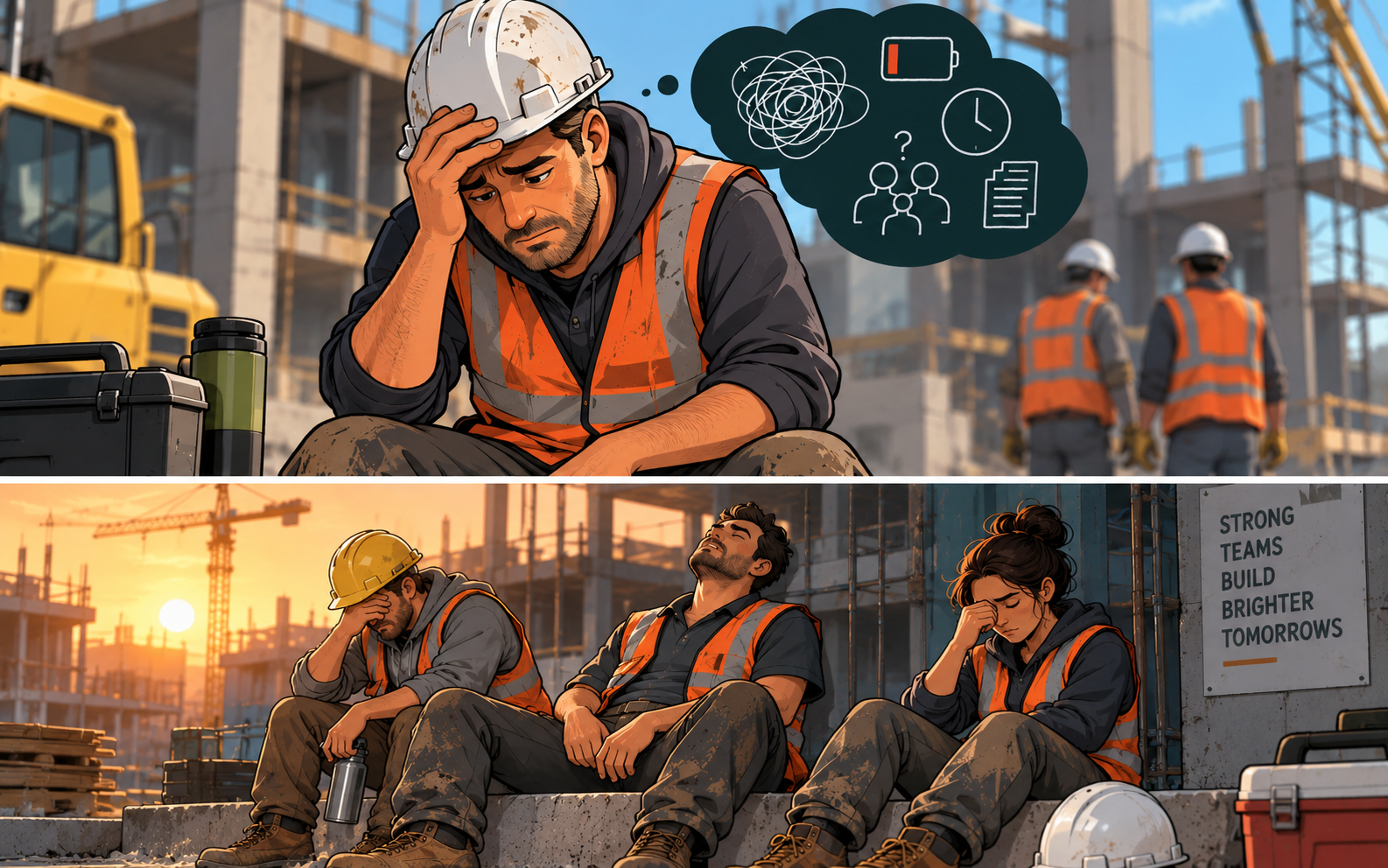
What Are the Symptoms of Work Burnout in Construction?
Burnout symptoms develop gradually and often go unnoticed until performance or health declines. Symptoms should be recognized early because learning to spot signs of burnout can help mitigate its effects on construction workers.
1. Emotional Exhaustion and Energy Depletion
Construction workers experience burnout through persistent emotional exhaustion, low motivation, and energy depletion. Chronic workplace stress makes it difficult to recover between workdays, increasing burnout risk and reducing job satisfaction.
2. Mental Distance and Reduced Engagement
Burnout often leads to mental distance from work. Construction workers disengage emotionally, sometimes withdrawing from conversations and suppressing feelings, show lower employee engagement, and struggle to maintain focus, contributing to reduced professional efficacy and lost productivity.
3. Declining Job Performance and Motivation
Unclear job expectations and ongoing work stress weaken job performance. Burned-out workers find it harder to meet demands, stay productive, collaborate, and sustain effort while also making it tougher to meet deadlines, increasing turnover and retention risk.
4. Physical and Mental Health Symptoms
Burnout affects both mental and physical health. Common signs include physical fatigue, headaches, sleep disruption, and poor mental health, with stress levels sometimes escalating to mental health challenges requiring time off or medical support. Getting enough rest, keeping consistent sleep schedules, and maintaining adequate nutrition also play a significant role in lowering burnout risk. Micro-breaks and physical pacing can also reduce mental strain during physically demanding construction work.
Why Burnout Is a Communication Problem, Not Just a Workload Issue in Construction
In construction, burnout is often treated as a workload or wellness issue, but statistics show it is also a work environment and culture issue, with communication breakdowns playing a central role in how stress builds and persists on job sites. Creating a positive culture around mental health discussions can reduce stigma associated with discussing stress, and that matters in a high-pressure sector where stigma contributes to burnout, turnover, and lower job satisfaction.
a. Avoided Conversations and Misalignment
Unclear expectations and unresolved tension increase chronic workplace stress. When feedback and alignment are missing, construction workers experience higher stress levels and emotional exhaustion, even without heavier workloads. Avoided conversations also leave safety concerns unspoken and make regular safety reviews less effective, even though they can reduce construction accidents by 90%.
b. Managers Struggling with Difficult Discussions
Many construction managers lack support to handle performance, well-being, and conflict conversations, and need training supervisors can use to recognize stress and respond early. This allows job stress to escalate, increasing burnout risk, disengagement, and reduced job performance, while effective stress management also includes providing support through peer support and professional resources.
c. Why Policies and Wellness Programs Fall Short
Wellness programs and mental health benefits matter, but they do not fix daily communication gaps. Without practical support for real conversations, workplace burnout continues despite good intentions. Wellness efforts are more effective when the employer gives workers more control over scheduling, including flexible shift options that support work-life balance and can significantly reduce burnout.
How Georgia helps prevent burnout at the source in Construction
Burnout has serious implications for well-being, performance, and retention, with nearly half of workers having experienced burnout and many construction workers struggling under ongoing pressure. Georgia addresses burnout at its source by helping teams develop strategies for handling the difficult conversations that often go unresolved, especially in remote or distributed construction teams where stress can spill into personal relationships. In a construction business, that support works best alongside mental health resources, which can improve worker loyalty by 57%, and clear opportunities for growth.
Through short, practice-based role-plays, Georgia supports construction managers before issues escalate. Training, skills building, and career development are practical ways a company can strengthen loyalty and retention, and career advancement opportunities also improve job satisfaction. It builds clarity, psychological safety, and confidence through realistic practice, helping reduce stress and improve day-to-day communication.
To see how Georgia can support your construction teams, book a call and explore the approach.
Final Thought
Burnout stats show that workload alone is not the root cause; how expectations are set, feedback is handled, and difficult conversations are managed determine whether stress escalates into burnout. Addressing burnout effectively requires practical support that helps construction managers and teams communicate clearly under pressure, making tools like Georgia critical for protecting employee well-being, performance, and retention. For construction professionals, burnout can carry especially serious mental health consequences, with higher rates of depression and suicide, and suicide deaths in construction are five times higher than job site accidents.