
Protecting Workers Underground: A Practical Guide to Safety in Mining
Feb 3, 2026
Safety in mining is not a compliance exercise. It is a system-level responsibility built into daily mining operations. The industry remains high-risk due to mobile and electrical equipment, loose materials, limited visibility, and other serious hazards that lead to injuries, accidents, and near misses. Without strong risk assessment, proper training, and adequate protection, unsafe conditions and human error can quickly harm workers' and miners' health.
In this blog, we examine why mining companies must lead with proactive mining safety, using structured safety measures, emergency response protocols, and operational control to prevent accidents and protect workers.
Where Risk Lives in the Mining Process
Most accidents in mining operations do not come from the unknown. They arise from predictable, controllable hazards throughout the mining process and are present in daily work areas. Effective mining safety starts by understanding where these risks concentrate and why they persist.
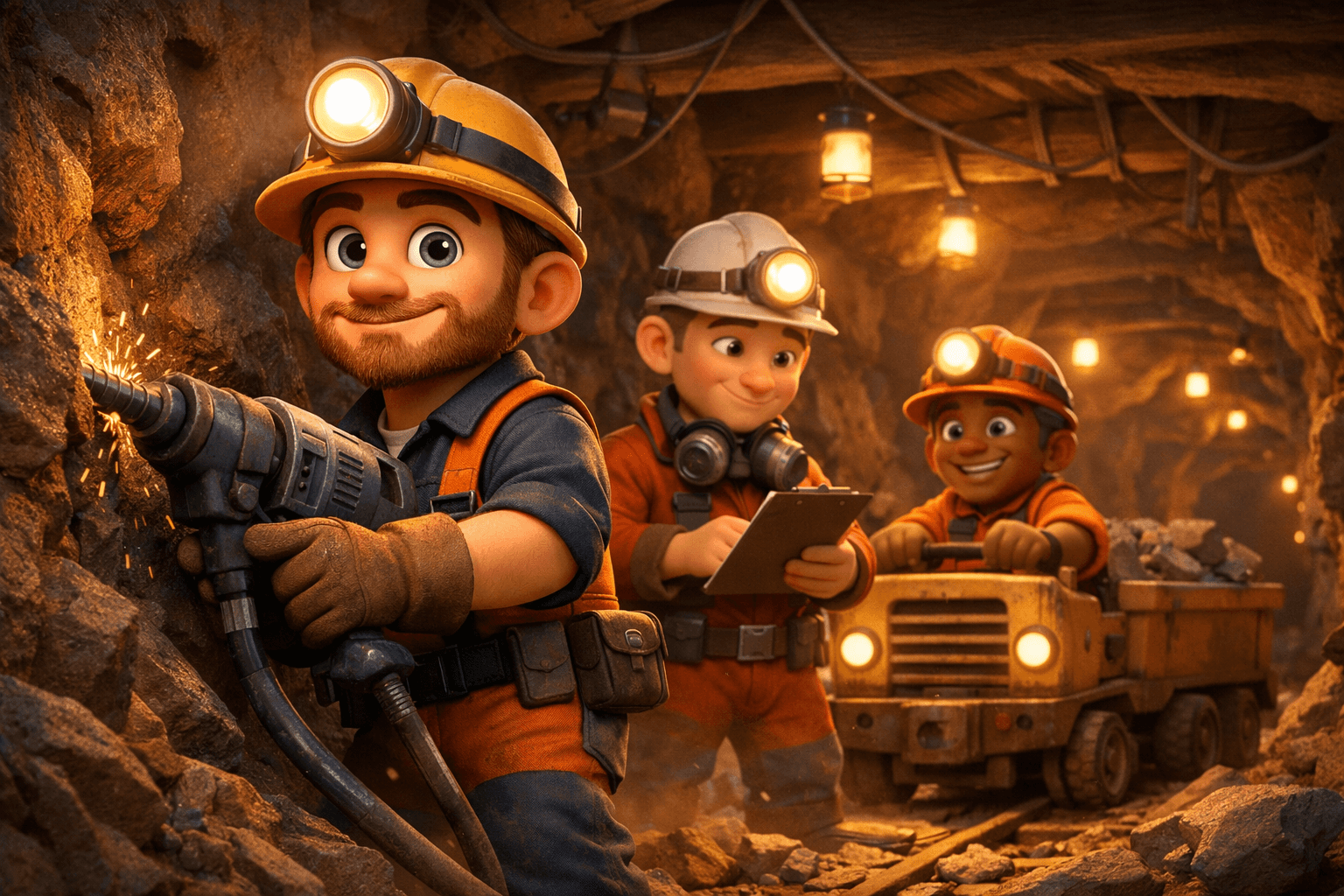
Common workplace hazards in mining operations
In active operations, workers face various hazards tied to equipment and environment:
Mobile equipment operating in tight spaces with limited visibility
Electrical equipment that is not properly maintained or in good condition
Loose material creates slip, trip, and impact risks
These conditions create significant risk when procedures are ignored or equipment is poorly maintained.
Serious hazards with high impact
Some hazards carry immediate and severe consequences:
Cave-ins caused by unstable ground or poor support
Flammable gases, coal dust, and chemical hazards that can trigger fires or explosions
These risks demand strict controls, training, and personal protective equipment.
Human factors and time pressure
Heat stress, heat-related illnesses, and miner health concerns continue to affect worker well-being. Human error and unsafe conditions multiply risks, especially when a few minutes of inattention occur. According to a 2025 industry report, mining accidents linked to equipment and environmental hazards remain a major concern, with hundreds of serious injuries reported each year globally.
Risk Assessment as the Foundation of Mining Safety
Mining safety starts with systematic risk assessment. In mining operations, hazards do not appear at random. They are tied to specific work areas, equipment, and procedures that repeat every shift. Without a structured approach, potential hazards such as electrical equipment failures, flammable gases, coal dust, or cave-in injuries remain unmanaged and continue to threaten worker well-being.
Risk assessment as an operational backbone
A strong safety program relies on identifying various hazards before incidents occur. This means assessing significant risk by work area and understanding how tasks, tools, and conditions interact. Mining companies that map hazards consistently are better positioned to prevent injuries and avoid property damage.
Linking assessment to action
Risk assessment only works when it connects directly to procedures, control measures, and training. Findings must shape how equipment is used, how work is performed, and what workers learn.
Continuous improvement through people
Mine operators play a critical role in ongoing hazard identification. Near misses, toolbox talks, and safety moments provide practical insights that can be shared in the next meeting, helping companies and employees strengthen prevention across the mining industry.
Safety Measures That Prevent Accidents
The most reliable safety measures are not reactive controls added after incidents, but disciplined practices embedded into how mining work is planned, executed, and monitored.
1. Personal protective equipment and providing adequate protection
Personal protective equipment is the first line of defense against workplace hazards. Helmets, respiratory protection, eye protection, and high-visibility gear provide adequate protection when selected for specific risks and used correctly. PPE only works when supported by proper training and consistent enforcement.
2. Proper use and regular inspections of equipment
Equipment must be used as intended and inspected regularly. Electrical equipment, mobile machinery, and tools that are not in good condition create preventable risks. Regular inspections help identify faults before they lead to injuries, accidents, or property damage.
3. Regular maintenance to keep tools and machines in good working condition
Maintenance is a safety control, not a cost center. Properly maintained equipment reduces failure rates, limits human error, and keeps operations running safely and efficiently across the mining process.
4. Ladder safety, three points of contact, one foot rules
Simple rules prevent serious injuries. Ladder safety, maintaining three points of contact, and enforcing one-foot movement principles reduce falls, one of the most common causes of injury in mining operations.
5. Audible warning signals, fire extinguishers, and monitoring equipment
Audible warning signals, accessible fire extinguishers, and monitoring equipment help workers respond quickly to changing conditions, especially in low-visibility or high-risk areas.
6. Preventing musculoskeletal problems and protecting worker well being
Repetitive tasks, awkward postures, and manual handling contribute to musculoskeletal problems. Ergonomic controls and task design protect miners' health and long-term well-being.
7. Data management through AI
Modern mining companies increasingly rely on AI-driven safety intelligence to detect risks early.
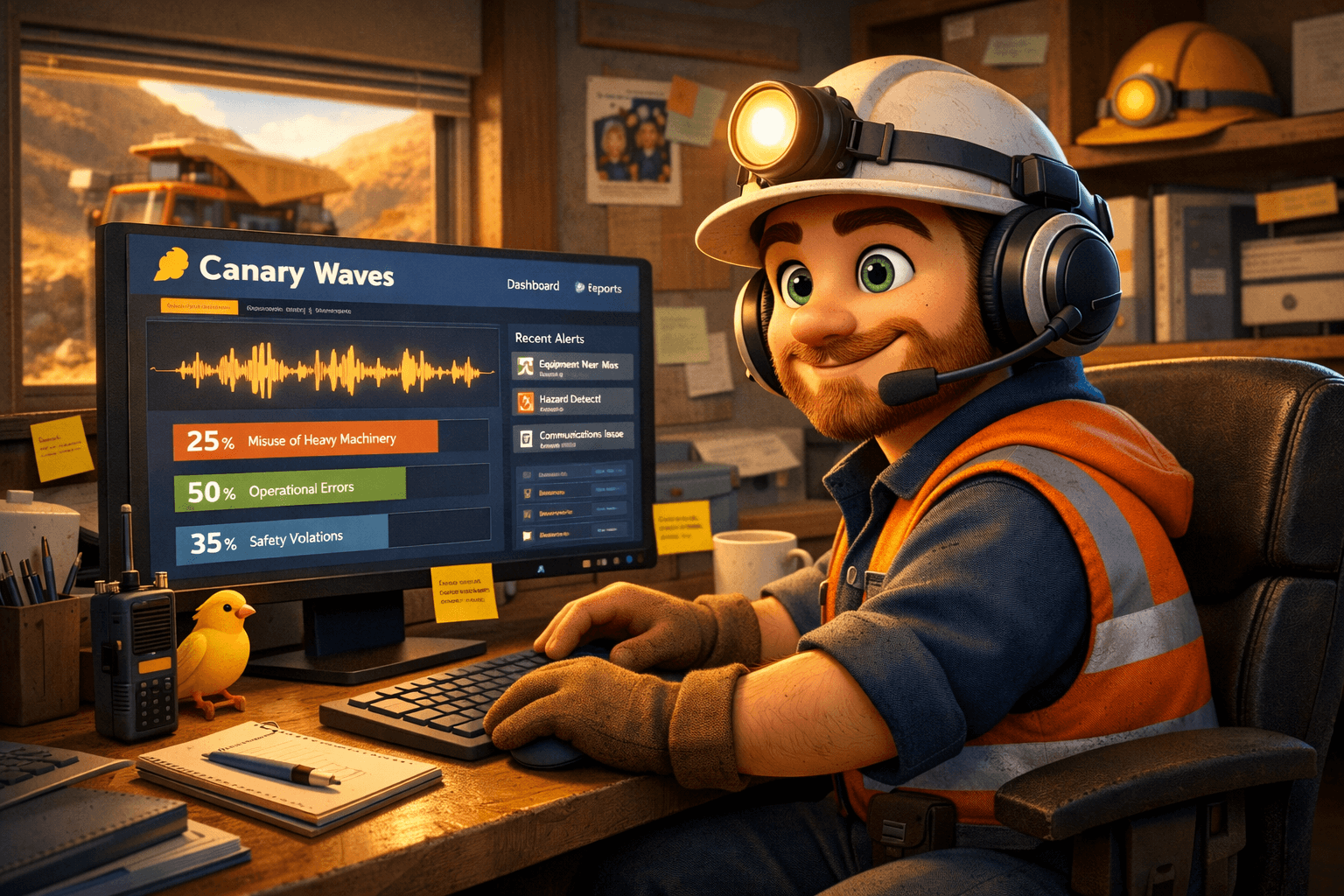
Canary Waves transforms unstructured radio communication into real-time safety insights, identifying hazards, unsafe conditions, and early warning signals embedded in daily operations. It turns frontline communication into actionable data. Canary Waves helps mine operators move from reactive safety to continuous prevention.
Emergency Response and High-Risk Scenarios
In mining safety, response speed determines outcomes. Fires, cave-ins, and gas incidents require emergency response protocols that are simple, practiced, and immediately actionable. Procedures should clearly define who acts, what to do first, and how to communicate so workers can respond without hesitation in high-stress situations.
Practical preparedness on site
Effective preparedness goes beyond written plans. Regular drills, hands-on training, and toolbox talks help miners recognize specific hazards and act correctly. Safety moments should reinforce real-world scenarios, such as evacuation routes, gas alarms, and fire suppression procedures. Audible alerts and clear signals ensure employees can work safely even in noisy or low-visibility conditions.
Protecting workers and operations
Prepared teams reduce injuries and prevent escalation. Mining companies that treat emergency readiness as a daily discipline protect workers, maintain operational continuity, and strengthen safety performance across the industry.
Final Thought
Mining safety works best as a continuous system of assessment, control, and maintenance. When mining operations are designed to operate safely, they protect worker health, equipment, and operational continuity. Mine operators and companies that lead by example embed safety and health into everyday decisions, creating more resilient and productive operations.
To move from reactive safety to real-time prevention, book a demo of Canary Waves and see how AI-powered safety intelligence helps mining teams detect risks early and act before incidents occur.