Soft Skills Training for Managers
Mar 31, 2026
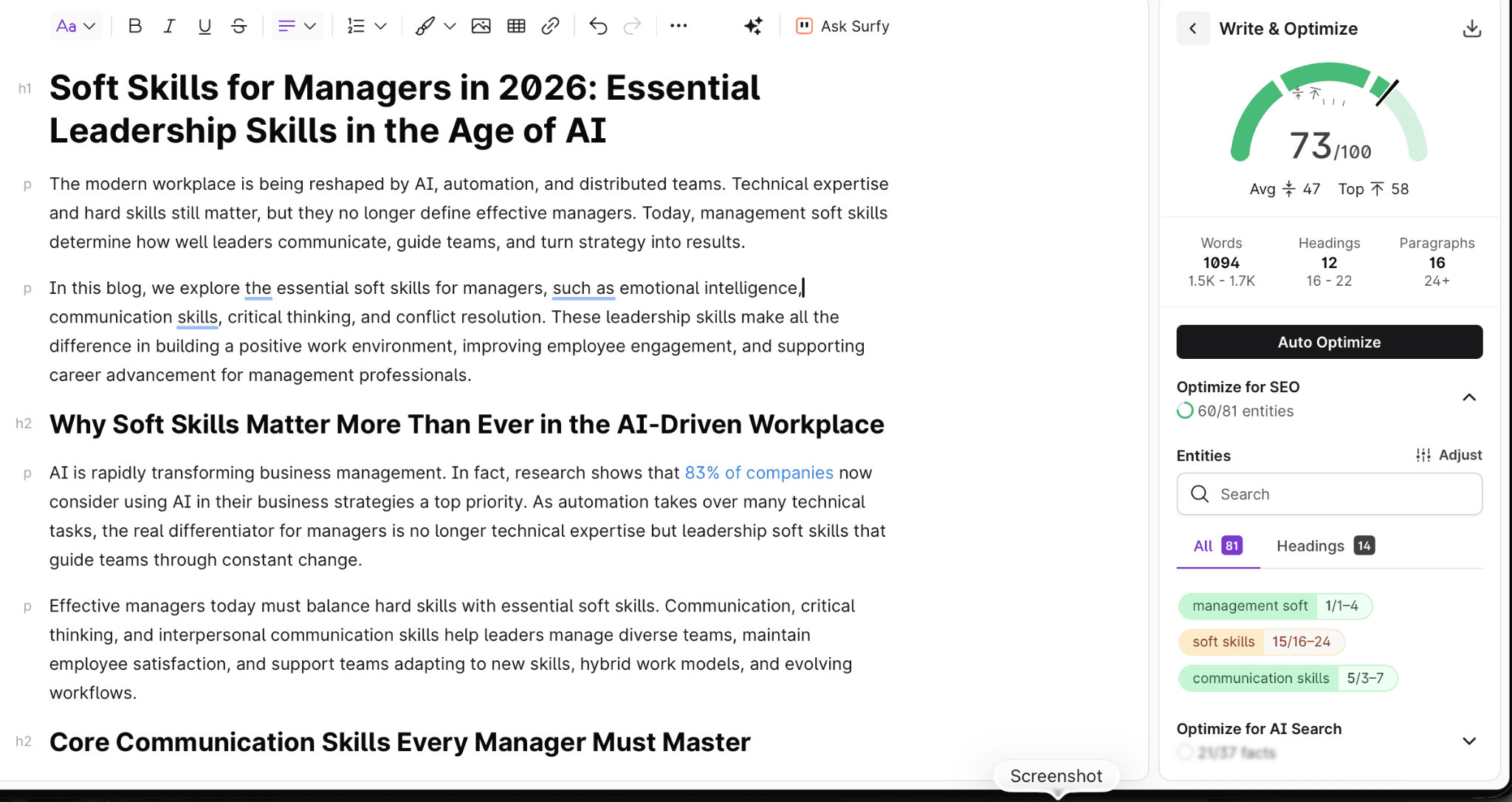
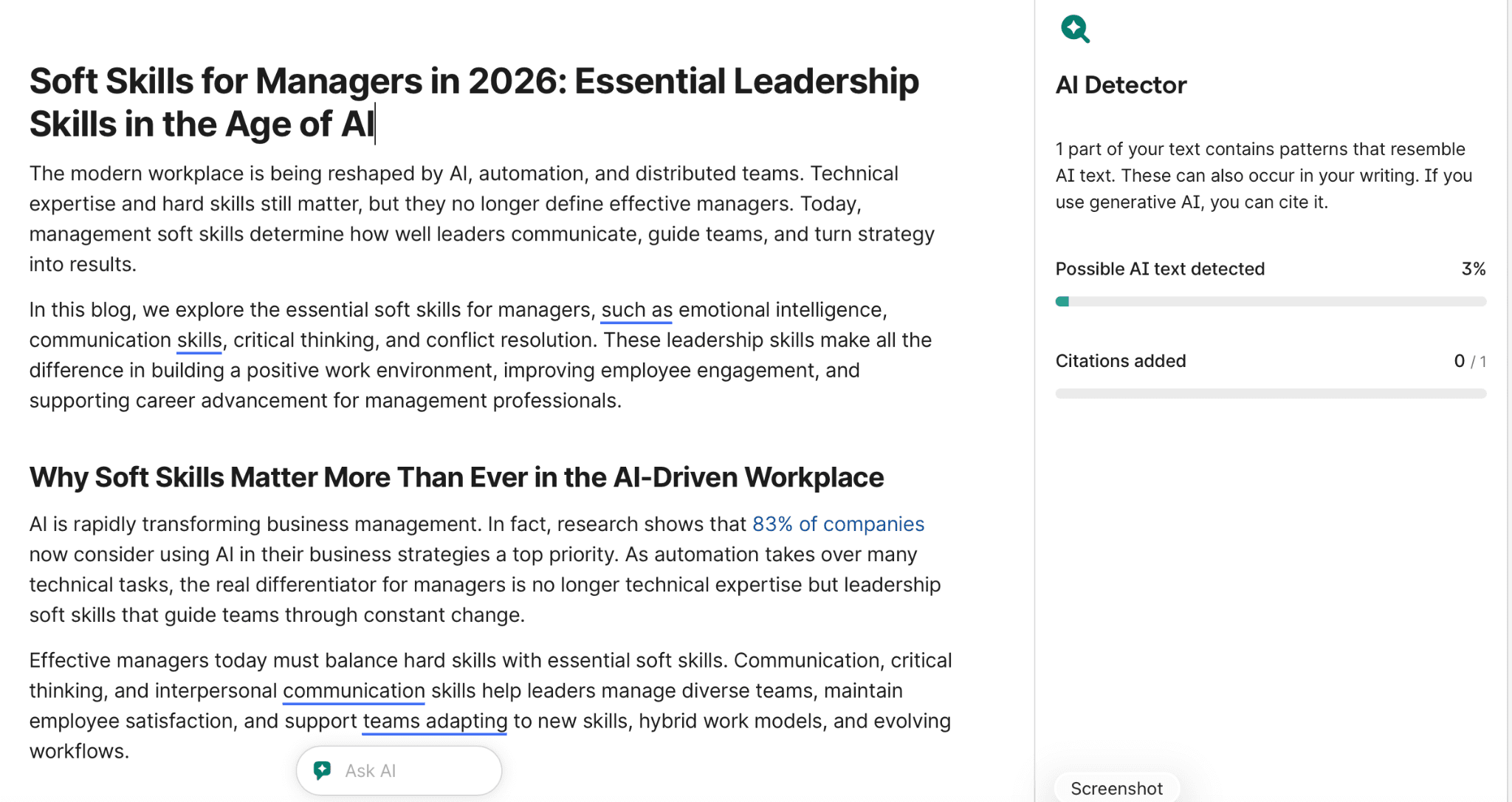
Soft Skills for Managers in 2026: Essential Leadership Skills in the Age of AI
The modern workplace is being reshaped by AI, automation, and distributed teams. Technical expertise and hard skills still matter, but they no longer define effective managers. Today, management soft skills determine how well leaders communicate, guide teams, and turn strategy into results.
In this blog, we explore the essential soft skills for managers, such as emotional intelligence, communication skills, critical thinking, and conflict resolution. These leadership skills make all the difference in building a positive work environment, improving employee engagement, and supporting career advancement for management professionals.
Why Soft Skills Matter More Than Ever in the AI-Driven Workplace
AI is rapidly transforming business management. In fact, research shows that 83% of companies now consider using AI in their business strategies a top priority. As automation takes over many technical tasks, the real differentiator for managers is no longer technical expertise but leadership soft skills that guide teams through constant change.
Effective managers today must balance hard skills with essential soft skills. Communication, critical thinking, and interpersonal communication skills help leaders manage diverse teams, maintain employee satisfaction, and support teams adapting to new skills, hybrid work models, and evolving workflows.
Core Communication Skills Every Manager Must Master
Clear communication is the foundation of effective management. Managers who communicate well align teams, reduce confusion, and strengthen collaboration.
Effective Communication: Effective communication keeps teams aligned on priorities and goals, improving productivity and reducing costly mistakes. Yet many leaders overestimate their clarity. Studies show 70% of managers think they communicate clearly, while only 23% of employees agree. Closing this gap is critical for effective leadership.
Verbal and Written Communication Skills: Managers must master both verbal and written communication skills. Clear communication styles help employees understand expectations, priorities, and business processes, allowing teams to work with greater clarity and confidence.
Active Listening: Effective managers actively listen to understand other people’s perspectives before responding. Active listening can reduce workplace misunderstandings by up to 40%, improving trust and collaboration.
Body Language and Tone: Body language and tone influence how messages are received. Confident and respectful nonverbal communication helps managers build credibility and strengthen team trust.
Open Communication: Encouraging open communication allows employees to share ideas and concerns freely. This creates a more engaged workforce and supports innovation. Tools like Georgia can also help managers practice difficult conversations and feedback scenarios, building the confidence needed to foster open and honest dialogue within teams.
Team Collaboration: Strong communication helps managers provide guidance, align team goals, and support collaboration, improving teamwork and performance in group projects.
Emotional Intelligence and Self-Awareness in Modern Leadership
Emotional intelligence is a defining trait of effective leadership. Managers who understand their own emotions and those of others lead with greater awareness, empathy, and trust.
Self-Awareness: Self-awareness is the foundation of emotional intelligence. Managers who understand their strengths, limitations, and emotional triggers make better decisions and lead with greater credibility.
Empathy Skills: Empathy allows managers to understand other people’s perspectives. Empathetic leaders build stronger relationships and create a more supportive and inclusive workplace.
Managing Emotions: Effective managers know how to manage their own emotions, especially under pressure. This helps them maintain professionalism, respond thoughtfully, and guide teams through challenges.
Interpersonal Skills: Strong interpersonal skills allow managers to navigate workplace dynamics and build trust. These skills strengthen collaboration and improve overall team performance.
Empathy: Managers who demonstrate empathy better support the personal and professional lives of employees. This improves employee engagement and strengthens workplace loyalty.
Building Trust: Emotional intelligence helps managers lead with a positive attitude and build trust. Over time, this creates a healthier and more productive work culture.
Critical Thinking, Problem Solving, and Conflict Resolution
Modern managers face complex challenges that require thoughtful decision-making. Critical thinking, problem solving, and conflict resolution help leaders navigate uncertainty while maintaining team performance and trust.
Critical Thinking: Critical thinking helps managers evaluate information, question assumptions, and make better decisions. Leaders who think critically guide teams through uncertainty and make smarter strategic choices.
Problem Solving: Good managers identify root causes and develop practical solutions that keep projects and business processes moving forward.
Creative Solutions: Complex challenges often require creative solutions. Managers who encourage innovative thinking help teams adapt quickly and find better ways to overcome obstacles.
Conflict Resolution Skills: Managers with strong conflict resolution and mediation skills address disagreements early, protecting team relationships and maintaining productivity.
Encouraging Team Input: Effective managers encourage team members to share ideas and perspectives. This approach strengthens collaboration and leads to better decisions.
Balancing Logic and Empathy: Combining critical thinking with strong interpersonal communication helps managers resolve problems while maintaining trust within the team.
How Managers Can Develop and Strengthen Soft Skills
Soft skills are not fixed traits. Like technical knowledge, they can be learned, practiced, and refined over time.
a. Continuous Learning
Managers should actively pursue soft skill development through leadership programs, workshops, and training courses. Continuous learning helps managers build communication, emotional intelligence, and leadership skills that keep pace with the modern workplace.
b. Coaching and Mentoring
Coaching and mentoring accelerate soft skill development. Working with experienced leaders allows managers to practice communication, conflict resolution, and decision-making in guided environments. Role-playing scenarios are especially effective for improving real workplace interactions.
c. Seeking Feedback
Strong managers regularly seek feedback from peers, supervisors, and team members. Honest feedback helps leaders identify blind spots, improve communication styles, and refine their leadership approach.
d. Practicing in Real Work Situations
Soft skills develop through application. Managing projects, leading group discussions, and handling workplace challenges help managers strengthen time management, collaboration, and decision-making.
e. Organizational Support
Organizations must also invest in soft skill development for aspiring managers. Training programs and leadership development initiatives build stronger management professionals across the company.
How Georgia Helps Managers Develop Soft Skills in the Age of AI
AI tools like Georgia are transforming how managers develop soft skills. Instead of relying only on workshops or theory, Georgia provides realistic role-play scenarios where managers can practice difficult conversations, conflict resolution, and communication challenges in a safe environment. With personalized scenarios, adaptive dialogue, and structured feedback, managers can repeat conversations, refine their approach, and build confidence faster.
Book a free Georgia demo today to see how your managers can practice the conversations that matter and develop stronger leadership skills.
Final thought
In 2026, the managers who succeed will be those who master the right soft skills. While technical knowledge still matters, communication, emotional intelligence, critical thinking, and conflict resolution drive stronger teams and better results. Managers who continuously develop these skills will lead diverse teams more effectively and thrive in an AI-driven workplace.
Metatitle: Soft Skills for Managers in 2026: Essential Leadership Skills in the Age of AI
Metadescription: Discover essential soft skills for managers in 2026, including communication, emotional intelligence, and leadership.