
Training Vision AI Model
May 16, 2026
Vision AI for Dummies: From Gold Mines to Luxury Bags
Vision AI enables machines to interpret images and video across industries like gold mining, jewelry design, construction, and luxury accessories. But it is not a shortcut to instant value. Its real impact comes when precision directly affects business outcomes, not when it simply automates tasks.
In Episode 17 of Startup Witch with Julia Georgi of KB&G Consulting, we discuss how founders should look past the hype and ask a better question: Is a generic AI model enough, or do you need fine-tuned precision?
Vision AI Is Not Cheap: And That’s the Point
Vision AI is not cheap, and pretending otherwise is misleading. As Julia puts it, “I’m not going to tell you this is cheap. And I’m definitely not going to tell you a fairy tale about how I trained a model for $1,000 and sold it for $25,000 two weeks later.” Vision AI requires deep, domain-specific thinking, not shortcuts.
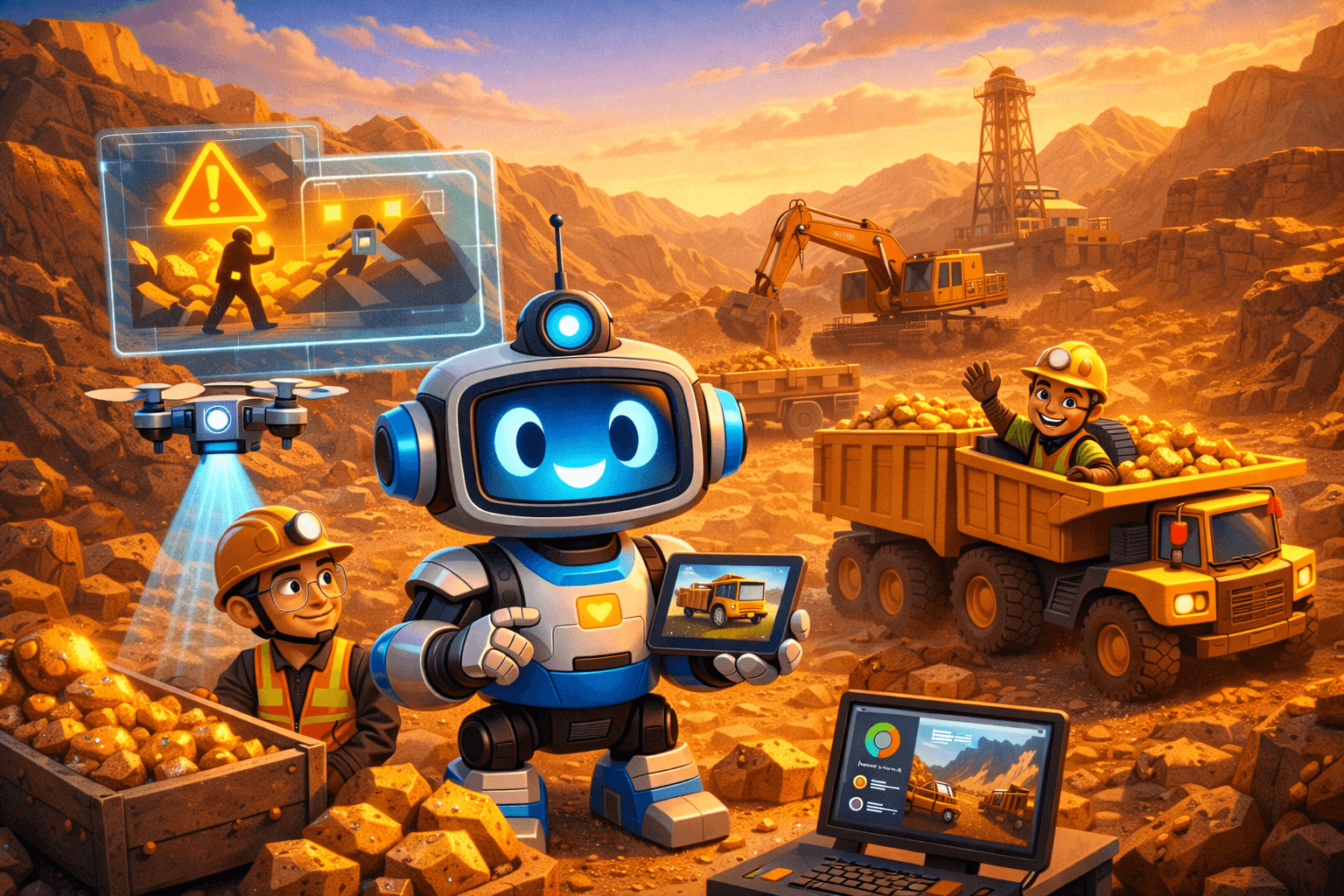
Alt text: vision ai in gold mining
Costs can range from a few thousand to over $100K, depending on complexity. The real lens is ROI. If precision reduces risk, protects revenue, or improves conversion, the investment becomes strategic, not expensive.
Generic vs Fine-Tuned Vision AI: The Real Decision Framework
Generic Vision AI models work well for common tasks like detecting objects in standard environments. They are fast to deploy and often good enough at a surface level.
But as Julia explains, “models trained in one environment degrade when exposed to a different one.” This is a domain shift. The real question is simple: Does precision affect outcomes? If it does, generic models fall short. If not, they may be enough. This is where real-world use cases begin to separate strategy from convenience.
Case 1: Gold Mining: When Vision AI Becomes a Safety System
In mining, vision AI is not a feature. It is a safety system.
PPE Detection and Hazard Monitoring: Used to detect helmets, track worker proximity, and monitor conveyor belts, helping prevent accidents in real time.
Harsh Environments Create Domain Shift: Underground conditions like dust, sodium-vapor lighting, and tight tunnels drastically change how visual data is captured.
Why Generic AI Fails: Standard models break under low visibility, reflective surfaces, and camera distortions common in mining sites.
Fine-Tuning Improves Accuracy: After adaptation, false positives decrease, and hazard alerts become stable and trustworthy.
When safety is on the line, vision AI for gold mining must be precise. There is no room for error.
Case 2: Jewelry Design: When Generic AI Fails at Precision
In jewelry, vision AI is not about creativity. It is about precision to the core.
AI-Generated Ring Previews: Used to create visual mockups of ring designs for customers in-store or online before production.
Precision Breaks Down Fast: Generic models produce the wrong number of stones, uneven spacing, and inconsistent symmetry.
Why Generic AI Fails: They are trained on broad datasets, not the strict mathematical and visual rules luxury design demands.
Fine-Tuning Restores Control: After training on brand-specific designs, outputs become consistent, accurate, and usable.
When precision defines the product, anything less than exact quickly erodes brand credibility.
Case 3: Construction Visualization: When Vision AI Drives Sales
In construction, vision AI is not about automation. It is about persuasion.
High-End Stair Previews: Used to show clients different materials, lighting, and finishes before the actual build, speeding up decisions.
“Good Enough” Is Not Enough: Generic AI can produce drafts, but they lack the polish expected in high-end projects.
Why Generic AI Fails: Basic outputs miss texture realism, lighting accuracy, and the premium feel clients are buying into.
Fine-Tuning Elevates Visual Quality: With adaptation, materials look real, lighting feels natural, and designs become presentation-ready.
Here, vision AI is not just a feature. It directly supports sales and influences buying decisions.
Case 4: Luxury Accessories: Protecting Brand Equity with Vision AI
In luxury, vision AI is not just support. It is brand protection.
Bag Customization Previews: Used to show customers personalized designs with different colors, materials, and hardware before purchase.
Small Errors, Big Damage: Generic models distort logos, alter proportions, and misplace details that matter at a premium level.
Why Generic AI Is Dangerous: They invent elements and ignore strict brand rules, creating outputs that feel inauthentic.
Fine-Tuning Ensures Consistency: Trained on approved designs, outputs stay accurate, aligned, and on-brand.
Here, vision AI is not just generating images. It becomes part of the product and directly reflects brand integrity.
How Much Does Vision AI Cost? (And Why It Shouldn’t Scare You)
Vision AI costs vary widely. Simpler use cases range from $3K–$15K, mid-level systems $10K–$50K, and advanced applications $25K–$120K or more. There are also ongoing monthly costs to consider.
As Julia explains, “costs are always relative to the upside.” The numbers may look high, but the real question is value. If vision AI reduces risk, improves conversion, or protects revenue, the cost becomes a strategic investment.
A Smarter Approach: Start Small, Then Scale
“You build what’s needed for your MVP… you validate the real problem… and you do it with a fraction of the full-scale cost,” as Julia explains. That mindset changes how you approach vision AI.
Start small. Focus on an MVP, prove the use case, and expand only when it delivers value. Avoid building full systems upfront. Staged development is not just practical. It is risk management, helping you invest gradually while keeping control over cost and direction.
When You Should (and Shouldn’t) Fine-Tune Vision AI
Not every use case needs fine-tuning. The key is knowing when precision actually changes outcomes.
When Fine-Tuning Is Necessary
Fine-tuning is necessary when your environment differs from training data or when accuracy impacts safety and liability. It also matters when precision defines the product or when brand integrity is critical. In these cases, generic models fall short and can create real business risk.
When It’s Not
Fine-tuning is not needed when AI is a support feature. If the visual domain is common, speed matters more than perfection, or there is a higher tolerance for error, generic models are often enough.
Canary Waves AI by KB&G Consulting
Canary Waves turns two-way radio chatter into real-time safety intelligence for mining and heavy operations. It captures, transcribes, analyzes, and reports voice data to surface hidden risks, prevent equipment collisions, reinforce safety protocols, and track KPIs, helping teams shift from reactive reporting to proactive safety management.
Final Thought: Vision AI Is a Strategic Decision, Not a Technical One
Vision AI is not just a tool. In many cases, it becomes the product itself. The real decision is not technical but strategic. Ask one question: Does precision change your competitive position?
If yes, invest and fine-tune. If not, move fast with existing models and focus on speed. The advantage comes from knowing the difference.
For a deeper breakdown and real-world examples, watch Episode 17 of Startup Witch with Julia Georgi of KB&G Consulting.
Meta title: Vision AI for Dummies: From Gold Mines to Luxury Bags
Metadescription: What is Vision AI and when should you fine-tune it? Learn real use cases from mining to luxury, costs, and strategic insights from KB&G Consulting.