
The Software Outsourcing Scams Bleeding Startups Dry
Feb 2, 2026
Most founders think software scams mean illegal fraud. In reality, the most damaging startup scams happen through everyday business relationships, when outsourcing partners overpromise, hide skill gaps, avoid accountability, and quietly drain budgets without real results.
In Episode 1 of the Startup Witch podcast, Julia Georgi, Founder of KB&G Consulting, breaks down the three scamming patterns nearly every founder encounters and explains how to spot them early, protect your funding, and avoid mistakes that silently kill startups.
What “Startup Scams” Really Look Like
Startup scams rarely look like obvious fraud. They usually happen when outsourcing companies, subcontractors, or even partners fail to deliver what they promised. They avoid accountability for results, misrepresent progress, or lie about where the work stands.
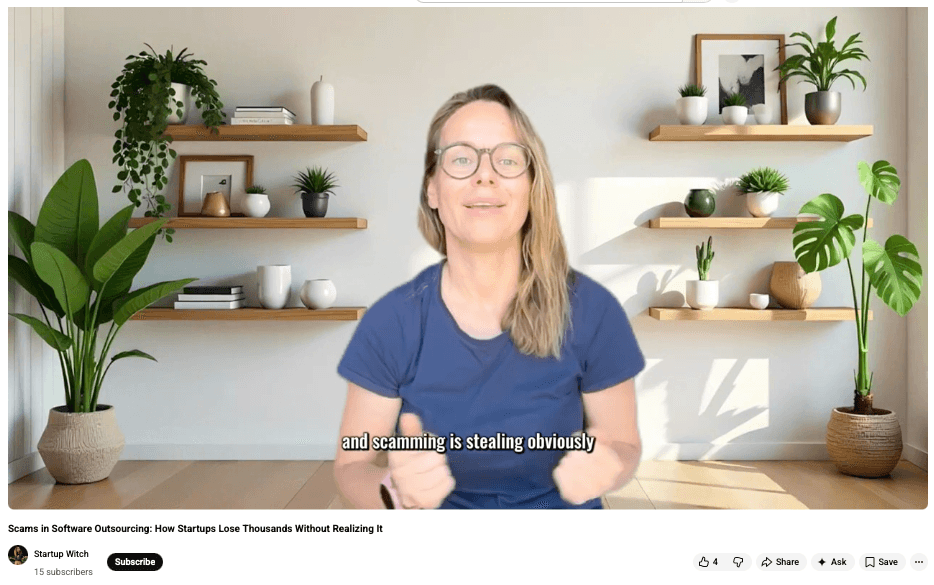
“Someone who is telling you that they do something and they’re not doing it is either stealing or scamming you.”
Startup founders often realize too late because these situations feel like normal working relationships at first. Payments continue, excuses accumulate, and responsibility is always shifted elsewhere. By the time it becomes clear that results are missing, months of time, trust, and funding have already been lost.
Scam Type #1: No Accountability for Results
“You’re just going to pay, pay, and the results are not going to be there.”
The first and most damaging outsourcing scam is the lack of accountability for results. This can be described as a “payment black hole,” where money keeps flowing but outcomes never materialize. Work is always “in progress,” delays are blamed on someone else, and updates focus on effort rather than delivery. Over time, founders realize they are funding activity, not results.
This situation is often enabled by weak or vague contracts, missing requirements, and partners who say yes to everything at the start. When the scope is unclear, budgets quietly double or triple without real renegotiation. Founders stay too long because they are already committed, speaking to investors or users, and feel stuck. That is why this pattern is one of the most destructive outsourcing scams startups face.
Scam Type #2: Fake or Inflated Technical Expertise
The second scam is a lack of skill, and it is especially common in software and IT. Julia warns that many people assume they can do anything, whether it is Power BI, Shopify, or AI, even if it is not their core competence. Founders often accept this because they are not technical themselves and do not know what questions to ask or how to interview developers properly.
“Basically, you pay them, you pay him to learn.”
That is how founders end up paying full rates while juniors experiment on live projects. This makes it a gray-area software scam. It may not start as intentional fraud, but the result is still poor quality, slow progress, and wasted budget. Practically, the same money spent on real expertise can deliver dramatically better outcomes.
Scam Type #3: Disrespect for Startup Funding
The third scam happens when partners do not respect where startup money comes from. Funding might be personal savings, family support, or “love money” from people who believe in the idea. Some providers see this as easy money and adjust their behavior accordingly, overpricing services and lowering their sense of responsibility.
Take it this way: “Don’t just treat it [your startup budget] as if it’s free money. Think of it as if it’s like your grandma’s money.”
In practice, this scam shows up through inflated rates, multiple projects running in parallel, and zero ownership of results. Everything sounds good in meetings, but accountability is missing. When money is treated casually, waste becomes normal, and the risk of failure is pushed entirely onto the founder. This mindset fuels early-stage startup scams and quietly accelerates startup failure.
How to Protect Yourself From Software & Outsourcing Scams
Most founders are not warned about these scams until real damage is done. Based on the lessons shared in the episode, here’s how to protect yourself before entering a new outsourcing or partnership agreement:
Assume Risk Exists: No founder is immune. Treat every outsourcing relationship as a potential risk until accountability and delivery are proven.
Pay for Results, Not Activity: Money should follow real progress and tangible outcomes, not hours worked or promises made.
Avoid Payment Black Holes: If accountability is missing and responsibility is always shifted, you are funding a system where results will never catch up.
Use Clear Contracts and Requirements: Even small startups need precise contracts. Clear scope and documentation protect you when things go wrong.
Renegotiate Costs Transparently: Legitimate issues happen, but cost increases should be discussed and agreed on, never imposed after the fact.
Verify Technical Skills Early: Always know who will actually do the work and ensure their skills match what you are paying for.
Respect Your Funding: Treat every euro or dollar like personal money. Partners who respect your funding will behave differently from day one.
Final Takeaway
Most startup scams are not obvious because they hide inside normal business relationships, friendly conversations, and confident promises. As discussed in Episode 1 of Startup Witch by Julia Georgi, ethical partners stand out by taking accountability for results, respecting how hard-earned startup funding is, and thinking long-term instead of chasing quick wins. The real lesson from years of startup execution is simple: vigilance, clear ownership, and values-driven partners matter just as much as the product itself.
If you are a startup founder or business leader navigating outsourcing, funding, or growth decisions, Startup Witch offers unfiltered, real-world lessons you rarely hear elsewhere. Watch the podcast to learn how to spot risks early, avoid costly mistakes, and build partnerships that actually help your business grow.
Startup Witch is a podcast hosted by Julia Georgi, where she shares unfiltered lessons from real startup execution, exposing what founders are rarely told about building, outsourcing, and scaling companies.
KB&G Consulting is a strategy and execution consultancy helping B2B companies turn vision into results by aligning pricing, operations, systems, and delivery at scale.