
Mining Rescue: How Teams Respond When Things Go Wrong Underground
Jan 22, 2026

Mining rescue is the specialized emergency response used to locate and assist miners during underground incidents such as collapses, fires, explosions, or gas releases. In high-risk mining environments, confined conditions and hazardous materials demand a rapid, coordinated response critical to survival.
In this blog, we explore how mining rescue works, why speed and preparedness matter after mining accidents, and how safety intelligence tools like Canary Waves help strengthen mining rescue readiness by identifying risks earlier in daily operations.
What Is Mining Rescue?
Mining rescue is the specialized emergency rescue function activated during a mine emergency to locate, stabilize, and extract trapped or injured miners from an underground mine. It is a critical part of mine safety, designed to operate in hazardous conditions such as roof falls, mine fires, gas releases, or explosions, particularly in underground coal mines and other high-risk mining operations.
Rescue operations are initiated when standard controls can no longer protect workers, and trained rescue personnel are required. Certified mine rescue team members, typically organized in teams of five members, respond from designated mine rescue stations or through an emergency mine rescue service, using specialized rescue equipment such as breathing apparatuses and first-aid supplies.
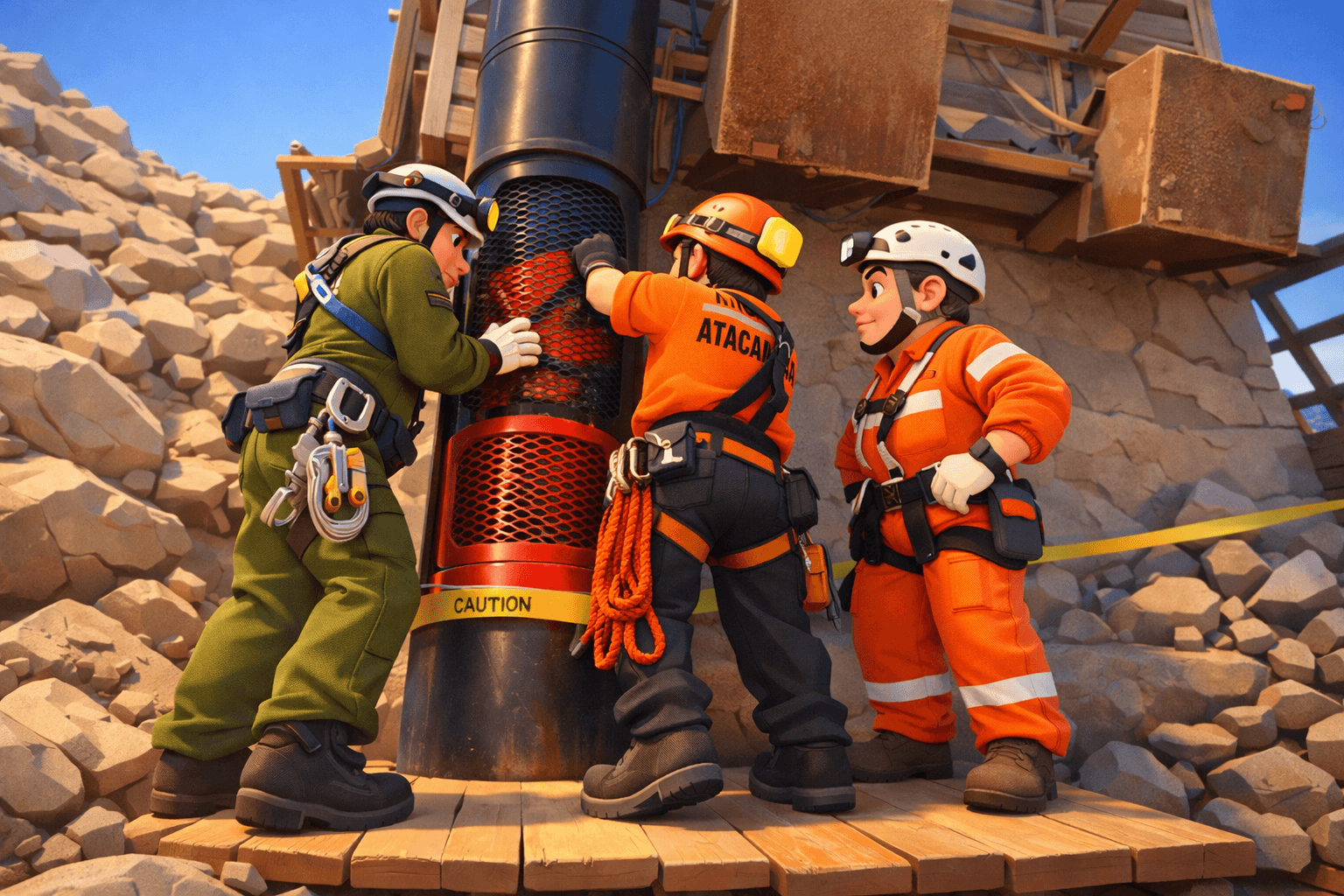
The roles within a mine emergency are distinct:
Rescue focuses on saving lives and assisting injured miners while conditions remain survivable.
Recovery begins only when rescue is no longer possible and shifts to retrieval and investigation.
Emergency response includes ventilation control, communication, and site stabilization that support both rescue and recovery efforts.
This structured approach ensures clarity of action when seconds matter underground.
How Do Mine Rescues Work?
Mine rescues follow a structured process designed to protect both trapped or injured miners and rescue personnel during a mine emergency. Guided by mine safety protocols and reinforced through ongoing mine rescue training, each step prioritizes control, coordination, and risk reduction.
1. Initial Incident Assessment
Rescue teams assess the incident from the surface to confirm the type of emergency, such as a mine fire or roof falls, and locate affected miners before underground entry.
2. Hazard Identification
Mine rescue team members evaluate gas levels, ventilation, fire risk, and ground stability, particularly in underground coal mines, using specialized rescue equipment and breathing apparatus.
3. Communication, Tracking, and Access Planning
Teams establish clear communication between the underground mine, rescue stations, and surface control, defining safe entry routes and tracking rescue team members.
4. Coordination with Surface Control and Emergency Services
Rescue operations are supported by surface teams, rescue services, and health authorities to manage ventilation, medical support, and first aid while maintaining overall site safety.
What Is a Mine Rescue Team?
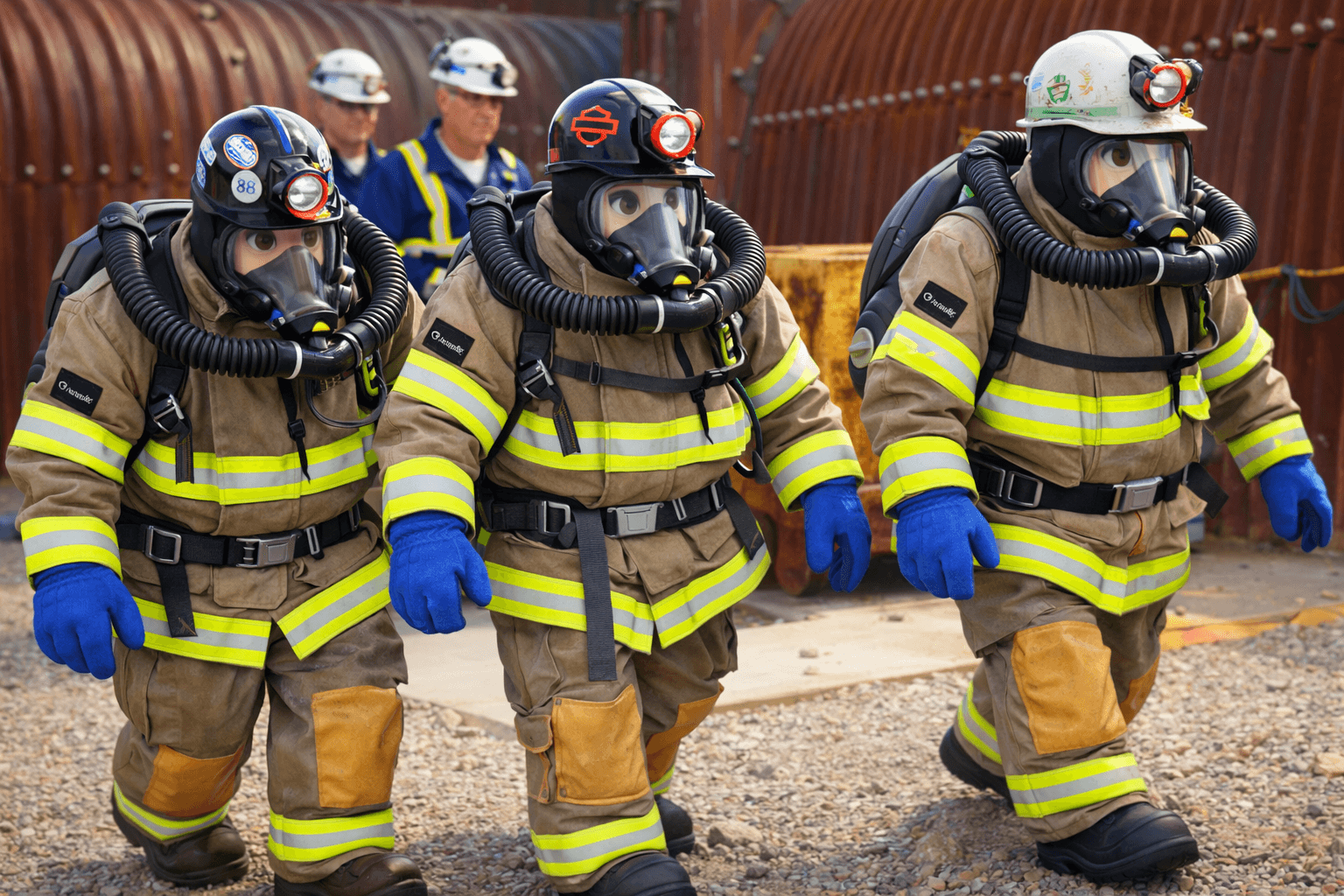
A mine rescue team is a fully qualified emergency response unit trained to operate in hazardous underground mining conditions during a mine emergency, such as fires, explosions, gas releases, or cave-ins. These teams are a critical part of modern mine safety systems.
Who Makes Up a Mine Rescue Team
Typically composed of five members, including trained mine rescue team members, a team captain, and support roles
Members are often experienced miners, mine foremen, or supervisors familiar with site conditions
Teams operate under the direction of a briefing officer and surface command during rescue or recovery operations
Training Requirements and Certifications
Teams must meet strict rescue team training requirements under national and regional mine acts
Includes initial training, regular drills, and refresher training annually
Many teams participate in mine rescue contests and rescue day events to maintain readiness and performance standards
Equipment Used During Rescue Operations
Breathing apparatus to operate in low-oxygen or toxic environments
Gas detection tools for carbon monoxide and other poisonous gases
Firefighting gear, first aid kits, communication devices, and other special equipment are staged at mine rescue stations
Role of Communication and Situational Awareness
Clear, continuous communication between underground mine rescuers, surface control, and emergency services is essential during a mine emergency. In many operations, radio communications are also recorded, providing a reliable source of real-time and post-incident data to support coordination, accountability, and decision-making.
Situational awareness is strengthened when communication data is captured and reviewed alongside on-site observations. Recorded communications help teams identify emerging hazards such as gas buildup, fire spread, or ground instability, track rescue team members, and adjust response strategies in real time, reducing risk to both trapped miners and rescue personnel.
How Many Levels Are in Mine Rescue?
Mine rescue is organized into tiered levels to match response capability with the severity of a mine emergency. While structures vary by jurisdiction, most systems follow a local, regional, and advanced classification under applicable mine acts and safety regulations.
Local mine rescue teams are the first to respond. Made up of fully qualified miners with initial and ongoing mine rescue training, they handle early-stage incidents such as mine fires or injured miners and establish control points like the fresh air base.
Regional and advanced rescue teams support incidents that exceed local capability. Coordinated through rescue associations or health authorities, they meet higher training requirements and operate specialized equipment such as breathing apparatus to manage complex underground hazards.
Reducing the Need for Mining Rescue with Canary Waves
Mining rescue is a vital last line of defense, but the safest incidents are the ones that never happen. Many mine emergencies are preceded by early warning signs in daily operations that go unnoticed until conditions escalate.
Canary Waves helps surface those risks earlier by turning routine radio communication into voice-based safety intelligence. Through real-time and delayed analysis of radio chatter, it identifies emerging hazards without disrupting workflows or requiring new hardware.
To learn how Canary Waves can help reduce emergency response scenarios at your site, book a call with our team.
Final Thought
Mining rescue saves lives when prevention fails, but it should never be the first line of defense. Strong rescue capability must be paired with proactive safety practices that identify risk before conditions deteriorate. Canary Waves supports a safer future for mining by surfacing early warning signs in everyday operations, shifting the focus from reacting faster to detecting risk earlier.